Wang Mengsha:The Undivided Field
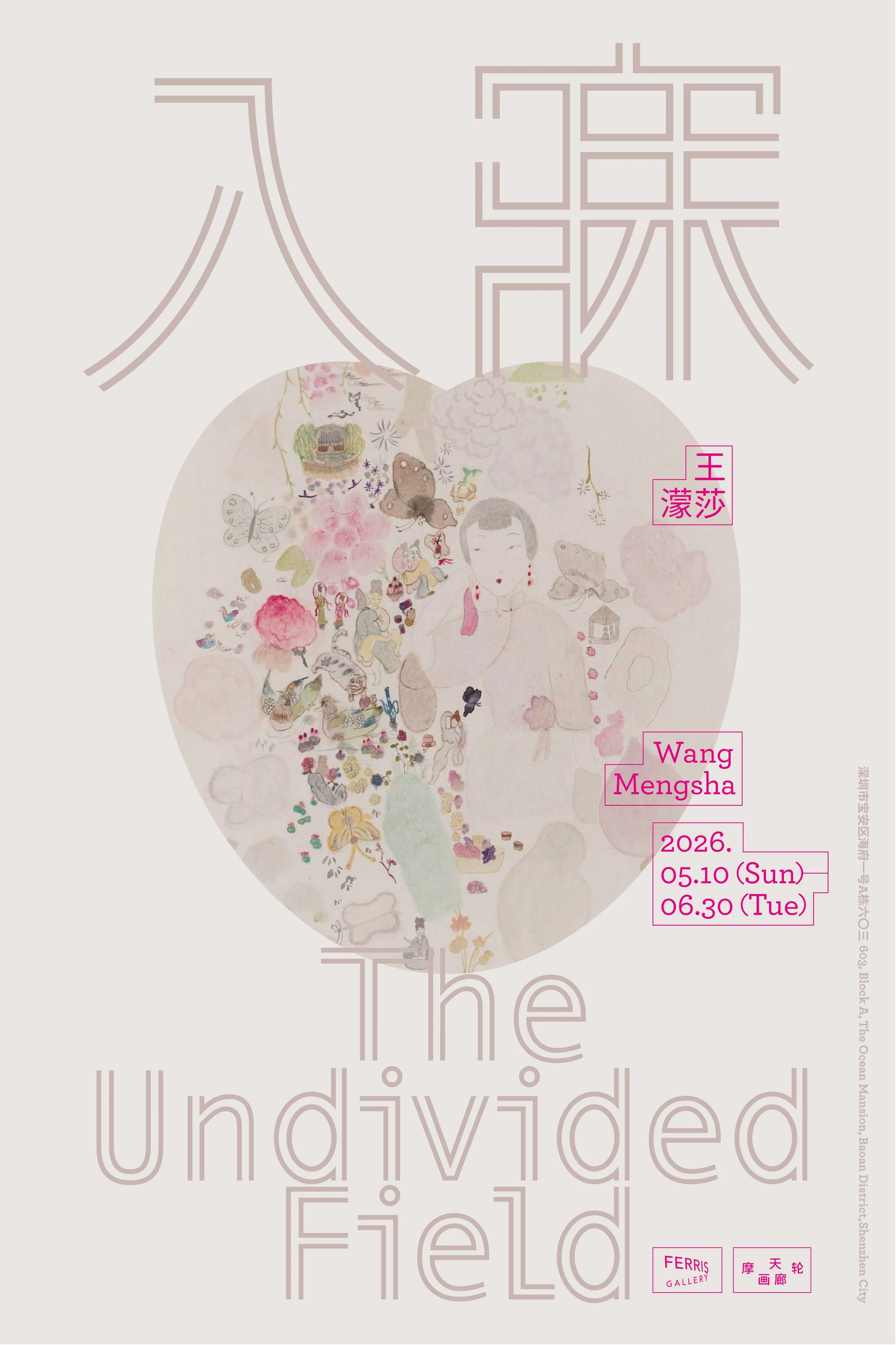
The Undivided Field: Wang Mengsha's Boundless Realm of Recumbent Wandering
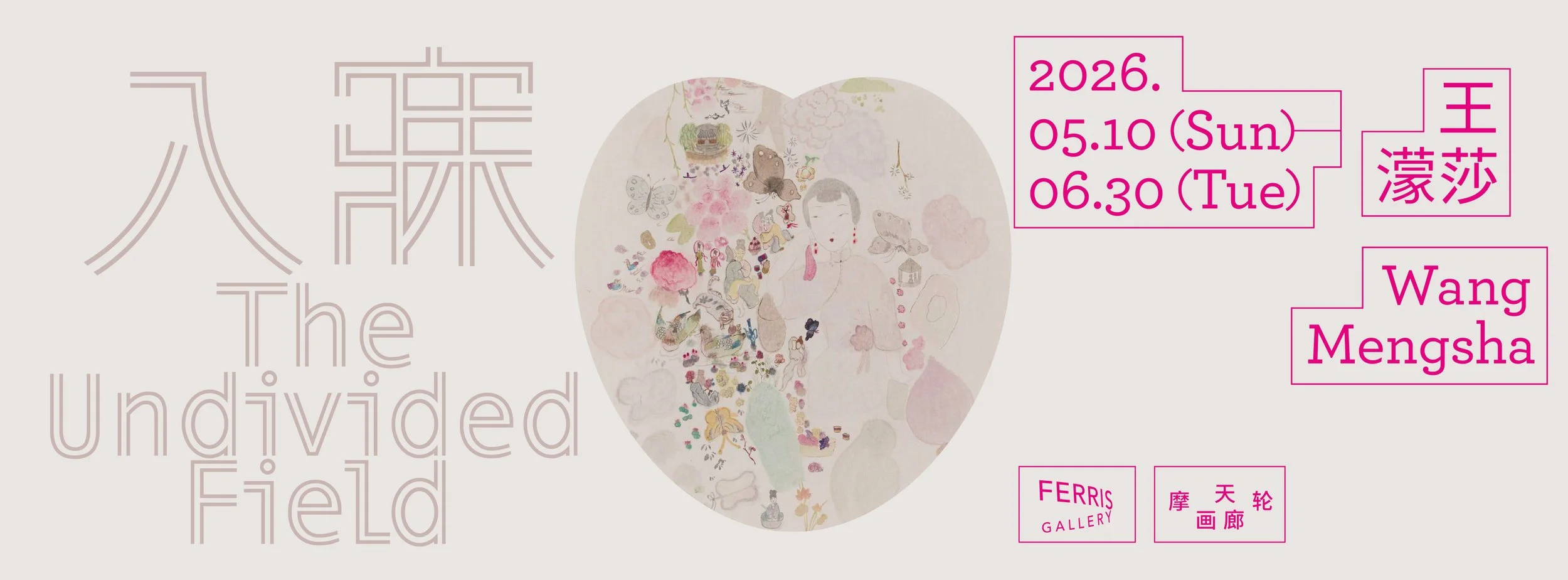
Exhibition: The Undivided Field | Artist: Wang Mengsha | Ferris Gallery
East or West? Ancient or contemporary? Grand or intimate? Real or illusory? Binary concepts serve as reference points in everyday cognition, forming the general framework through which people understand the world and engage with art. Yet when viewers enter Wang Mengsha's work, these established dualities begin to dissolve — for this is not a world of divisions, but a freely integrated, unbounded terrain. To understand Wang Mengsha, then, one must begin by relinquishing the conventions of the mundane world. Wang Mengsha paints in ink wash, a tradition governed by its own conventions: the turn of the brush tip, gradations of ink density, the interplay of fullness and void, prescribed subject matter, and the cultivation of qi and artistic spirit — each demanding meticulous attention. Yet it is precisely the path of first internalizing the rules before transcending them, of finding freedom within discipline, that constitutes the true essence of Wang Mengsha's painting.
Having grown up on the shores of Lake Tai, Wang Mengsha carries a natural wildness — bold, unpolished, resistant to convention — like a Taihu stone shaped by nature itself, immersed in the spirit of Jiangnan. Her turn to ink wash is entirely organic. Rigorous calligraphic training from an early age has embedded an instinctive command of brush and ink deep within her body; she can move freely across the xuan paper, guiding the brush's finest hairs and the traces of ink like a boat gliding unhurried across open water, the path of the ink following the pulse of her mind. Unlike ink traditions bound by strict conventions of brushwork and subject matter, the kind of ink practice that breaks beyond such limits and champions personal expression is often labeled "experimental new ink." Yet even this category fits Wang Mengsha poorly — the question is not one of old versus new, but that she was never meant to be categorized at all. Neither traditionalist nor innovator suits her; she does not belong to any camp. Ink wash is simply her tool of expression. On the day she entered the world of painting, she picked up the ink she had known since childhood — as a swordsman takes up a trusted blade, requiring only a fraction of one's inner strength to vanquish a hundred with a single sweep, riding the sword a thousand li.
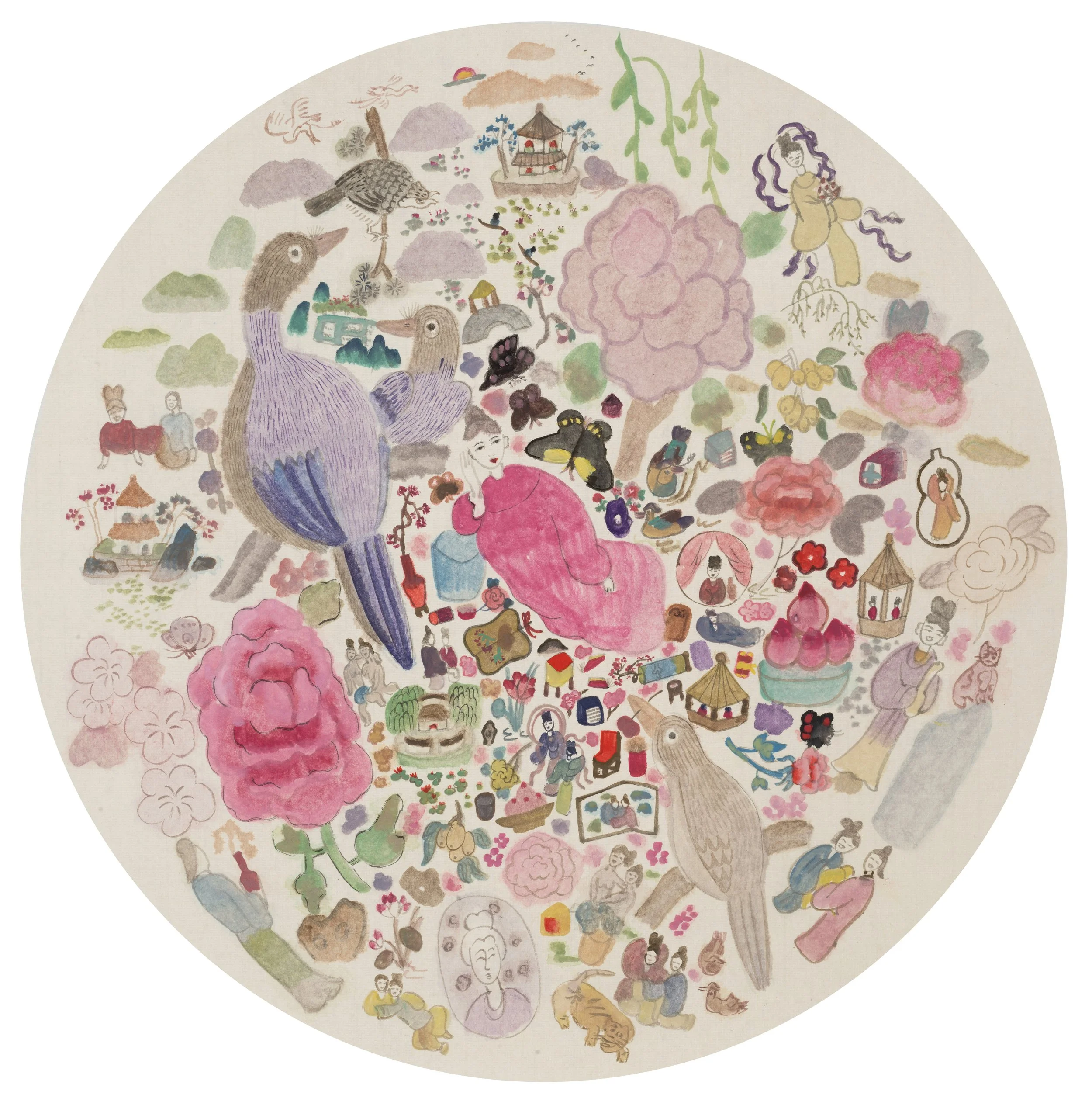
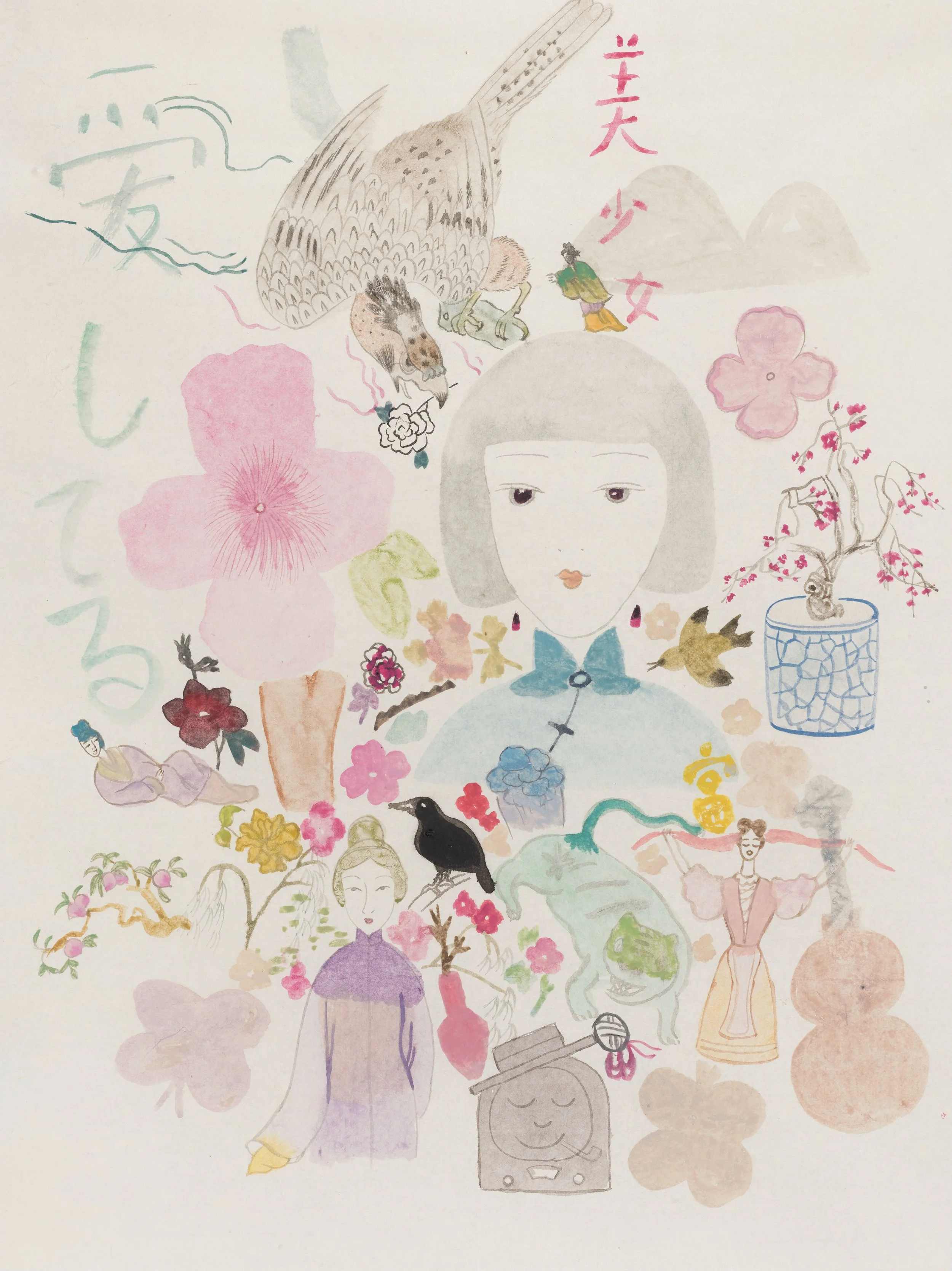
Wang Mengsha paints in the Freehand manner — not pursuing formal likeness, but emotional truth, seeking spirit over surface. Genuine feeling, made manifest, crystallizes into the concrete forms that populate her paintings. The birds, beasts, pavilions, vases, flowers, gourds, joys, blessings, and tender emotions that appear in her work are no longer what they literally are — they serve as vessels for memory, ritual, and time, an approach closely aligned with the generative perspective of Chinese painting's classical tradition. Every element of scenery is an element of feeling; every concrete form is a performance played out behind a curtain. Consider the half-lidded figure reclining within the composition, half-hidden behind a fan and suppressing a private smile — she gazes outward from the canvas, waiting to see how you will thread together the forms within. In every one of Wang Mengsha's works, there is a "person" — reclining, perhaps, or embraced in another's arms, or seated upright with a fan — and even within the fan's surface there are figures. All of them glance toward the viewer, poised as if ready to narrate the scene, forming an invisible point of entry. One may follow the figures to trace the painting's narrative, though this is by no means the only methodology for reading Wang Mengsha's visual mysteries. From top to bottom, right to left, center to edge — any approach can yield its own unfolding drama. When the performance ends and the artist sets down her brush, the viewer applauds; looking closely, the forms summoned by emotion have filled every inch of the paper — yet within the density of ink and the bloom of colors, the negative space breathes with its own quiet energy. In Luminous Essence (2026), a reclining woman occupies the radial center of the composition: she can be the origin of everything within the circle, or the final stroke that ties the whole work together. The figure in Reunion (2026) resembles a cover girl from a Republican-era film magazine, meeting the viewer's gaze directly — yet looking into the painting, one discovers that the folding fan she holds is itself a work by Wang Mengsha's own hand. If she were to paint a small fan or two in the real world, one imagines it would carry the same imagery as the fan held by the figure within. Wang Mengsha, by her own design, has passed through her own paintings and left her mark. We cannot frame her within the themes of traditional literati painting — yet not a single brushstroke falls outside the ink-wash tradition. This is Wang Mengsha's singular achievement. Brush, ink, paper, and inkstone are her instruments; mountains, rocks, flowers, birds, and figures are her elements — together they form the energetic structure of her work. The images she creates seek spirit and simplicity: a few strokes suffice to capture a complete presence. When meticulous brushwork appears, it is not employed for technical refinement but for an artful clumsiness — like a calligrapher manifesting the inner world of the spirit. In Young Beauty 09 (2022), five canonical figures appear, each rendered differently in posture, attire, expression, and gesture. Within a handful of strokes, Wang Mengsha reveals each one's distinct character and inner life — some finely observed, others quietly restrained — yet all of them live vibrantly within her painting. Xie Wuliang departed from the strictness of stele script, unbound by the formal regularity of Guange style — his center of gravity displaced, his emphasis placed on breath; Hongyi cultivated a restrained and stripped-down simplicity, purging emotion and refusing technical display. Wang Mengsha shares this disposition: every concrete form is a character, rendered in a few unhurried strokes, unstudied and naturally expressed — she does not paint so much as write in pictographic script. This may be connected to her deep practice of copying bronzeware inscriptions, seal script, and oracle bone characters. She leaves abundant information within her paintings, and every viewer holds the right to interpret and read the image. When a thousand people have looked upon Wang Mengsha's paintings, there will be a thousand Wang Mengsha's — and she will have lived a thousand times.
In the grand landscapes of Chinese painting, the human figure is diminutive — the self is not master of the world, but merely a presence within a two-dimensional plane. In Western painting, the human body has been anatomically analyzed and calculated, with its own codified aesthetic norms. Wang Mengsha, reaching back to childhood memories of scrawling freely across the walls of her home, has realized an autonomous aesthetic of her own inner world. She enlarges the "person" within her work, and dismantles what is conventionally called the three-dimensional beauty of scientific proportion — in Wang Mengsha's paintings, what feels right is what is beautiful. Everything depicted is an expression of a mind unbound, a translation of concepts, perceptions, and experiences into an assemblage of "objects": very light, very still, weightless, perspective made irrelevant, hovering across the picture plane, not necessarily connected to one another — together forming the singular spatial relationships unique to her work. Within the lineage of modern painting, "space" long ago departed from representation and re-presentation. Chagall layered memory and emotion to construct psychological space for his narratives, building an imaginative realm unconstrained by logic through metaphor; Matisse mobilized the viewer's spatial perception through color and blocks of hue, shaping spatial narrative through visual experience. In Wang Mengsha's context, she has moved beyond reliance on spatial narration altogether. Objects placed side by side, relationships deliberately weakened, present an open and unclosed structure — viewing becomes a wandering among suspended things, and when the gaze momentarily pauses within the composition, that, too, is viewing in progress. This free-form manner of writing represents a subversive state, yet simultaneously a steadfast fidelity to the ink-wash tradition — like a painting of antique objects, brimming with effortless delight.
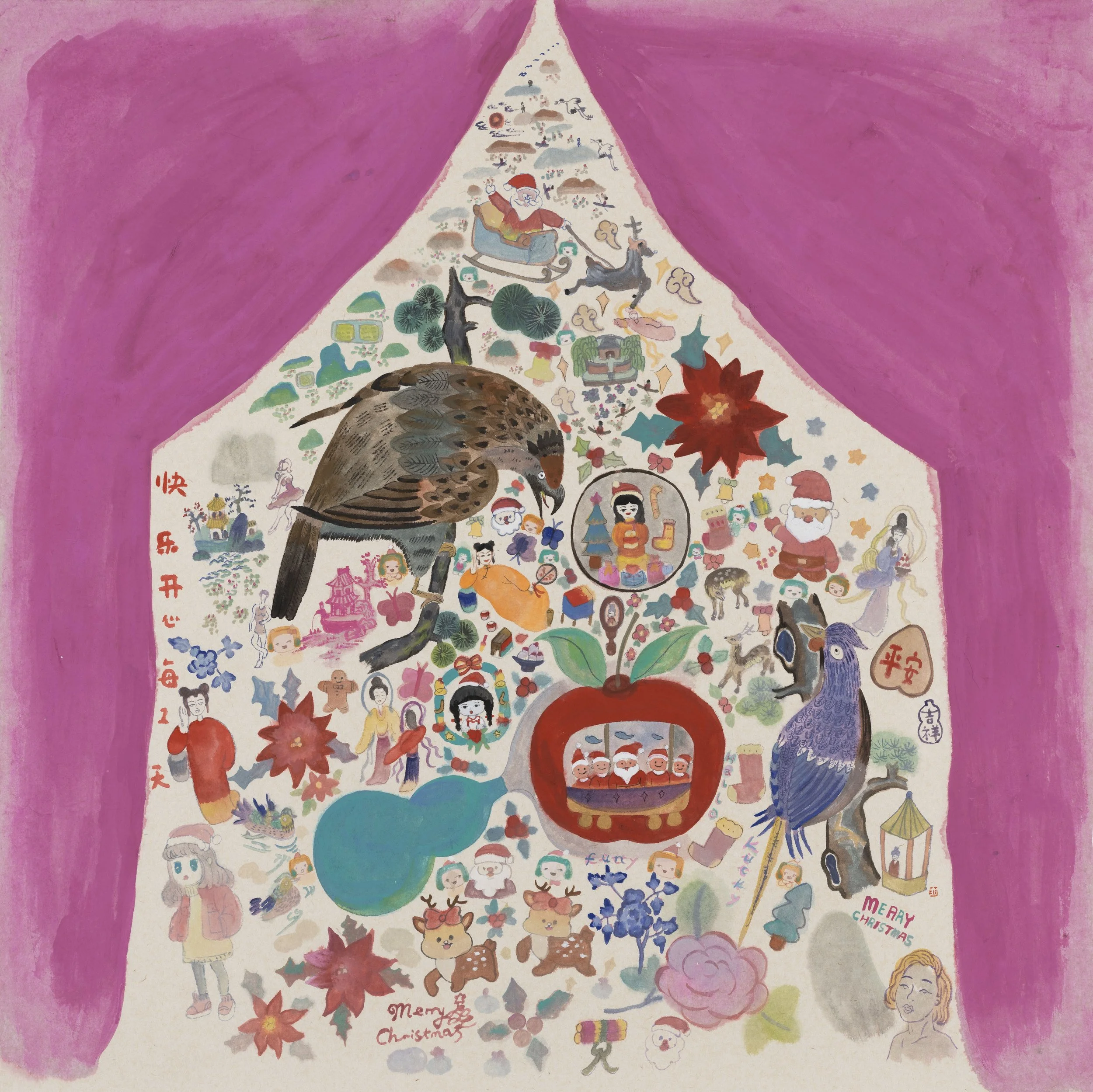
As in the artist, so in the painting: Wang Mengsha's work naturally exudes her own playful engagement with life. She favors rose red, pale pink, and sapphire blue, which form an unconscious yet subtle dialogue with the vermilion and mineral green of the traditional Chinese painting palette — creating not a color system that describes objects, but one that inflects states of mind: exuberant and stirring, without clamor. The application of color bestows upon the folk objects, worldly things, and figures of flesh and blood within the composition an animate vitality. Revisiting the theory of Pathosformel and Mnemosyne proposed by the German cultural historian Aby Warburg — the idea that images carry the collective experience and memory of a community — Wang Mengsha similarly attempts to activate gestures, expressions, and memories that traverse eras across different cultural registers, seeking to build visual bridges between shared human experiences. When the Precious Gourd, laden with associations of intimate and private realms, encounters the Young Beauty of a popular generation; when the good fortune of "ten thousand doors lit by the rising sun" traverses Christmas Eve in the form of a peace apple — everything becomes joyful and delightful, like the exhilarated return home after a long and merry celebration, only to find oneself unexpectedly drifting into a depth of lotus blossoms: such is the surprise in Wang Mengsha's paintings — unanticipated yet perfectly fitting, like tumbling into a dressing case in that twilight state between waking and sleep, and finding, with each careless reach, something one cannot bear to put down.
Form conveys meaning, meaning transmits feeling, feeling shapes form — and thus Wang Mengsha. Sixteen hundred years ago, Zong Bing, in his Preface to Landscape Painting, established the theoretical framework that would define Chinese painting: form as the bearer of the Tao, and purified perception as the means of savoring the image. Standing before Wang Mengsha's paintings today, this same core remains entirely applicable. Each time one unfolds the scroll, it is a journey of the spirit. Viewing is no longer a simple act of subject gazing upon object, but a form of participation. Your "inner monologue" and her "disordered utterance" meet in easy conversation, and from their collision springs a transcendent surprise. In that moment, we have all entered the painting — perhaps as an enormous butterfly, drifting into the drowsy afternoon of the reclining figures within, freely falling into dream. All things flow past before us: seemingly real, seemingly illusory, neither real nor illusory. Let it be seen as usual.