Zhou Zhiyuan:The Power of H+
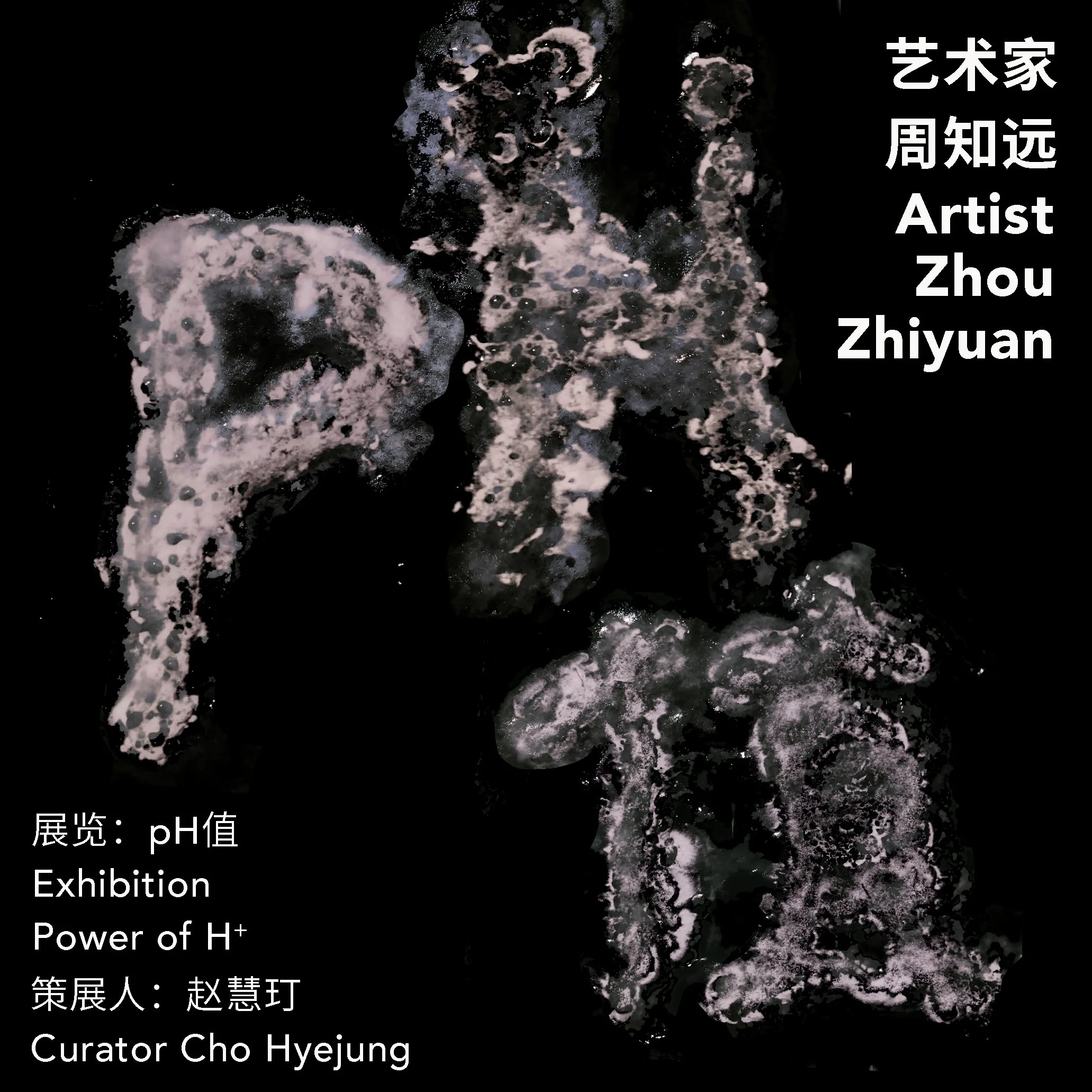
Zhou Zhiyuan is a physician who has witnessed countless moments between life and death over more than two decades in the Intensive Care Unit. His “special identity” often precedes his art in attracting attention. I, too, initially found it difficult to move beyond this perspective. Yet, as I engaged more deeply with his work, I became increasingly drawn to the unique resonance it carries. For Zhou, medicine and art are not separate realms, but intertwined necessities within life itself—ultimately forming a unified mode of action.
As a doctor, he stands daily at the threshold between life and death. Even after encountering death repeatedly, it never becomes something one grows accustomed to. While striving to prolong life, he must inevitably confront its unavoidable end. “Every day in the hospital I eliminate pathogenic microorganisms; returning to the studio, I cultivate them, nurturing microscopic universes.” With the same hands that have saved lives—and signed death notices—he fosters new forms of life in the studio. What cannot be fully governed within the clinical space may find another possibility through artistic practice.
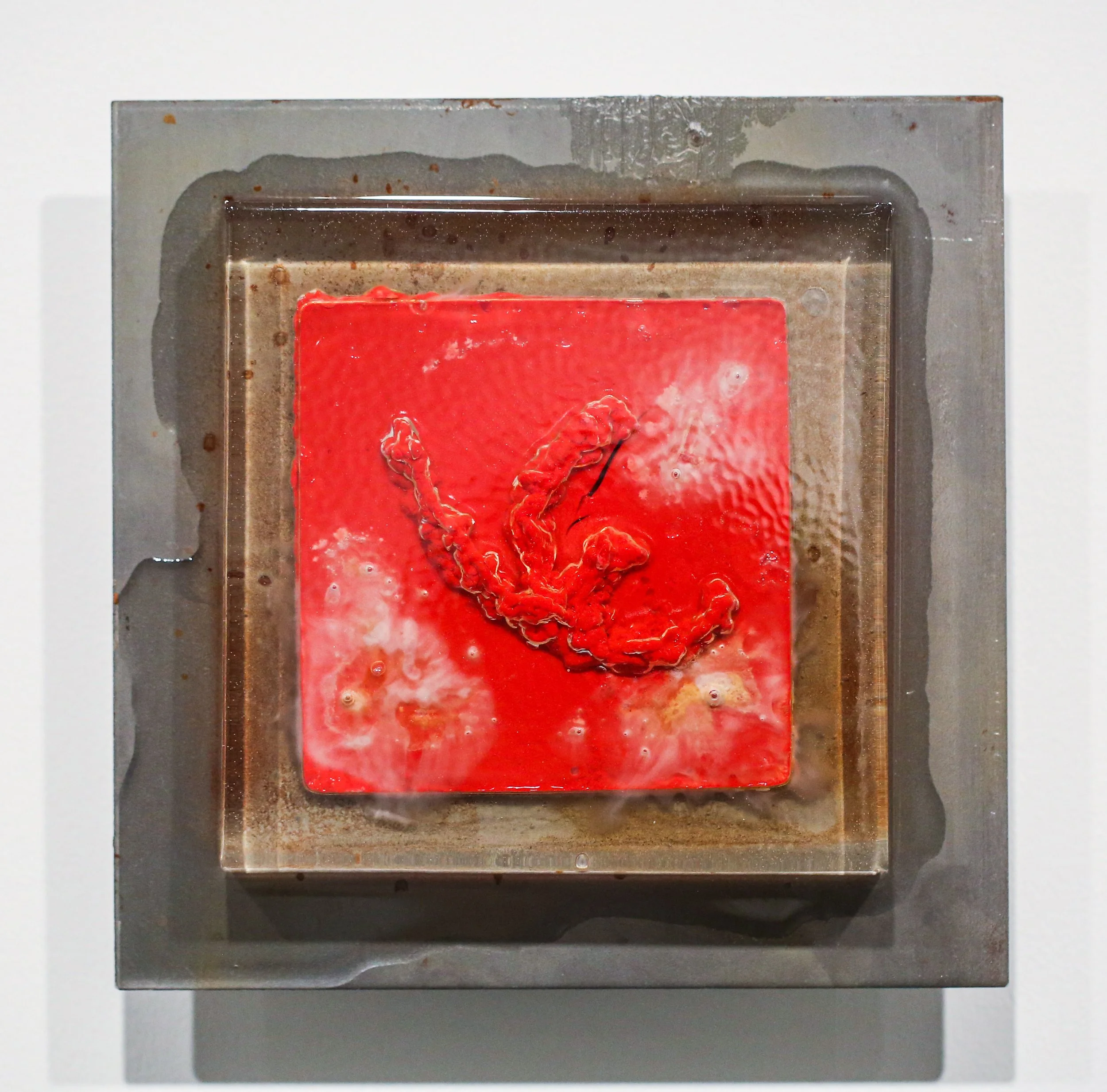
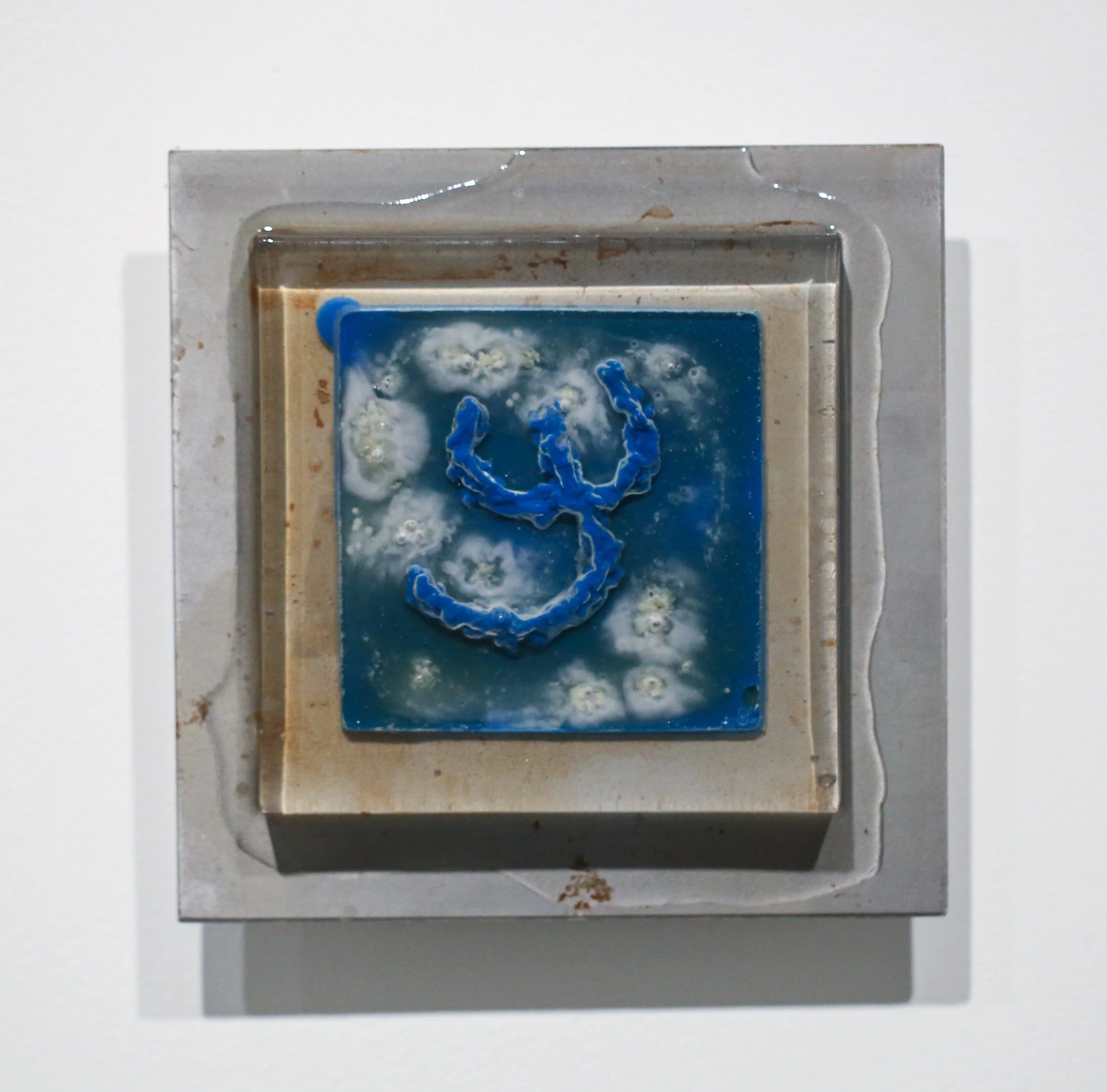
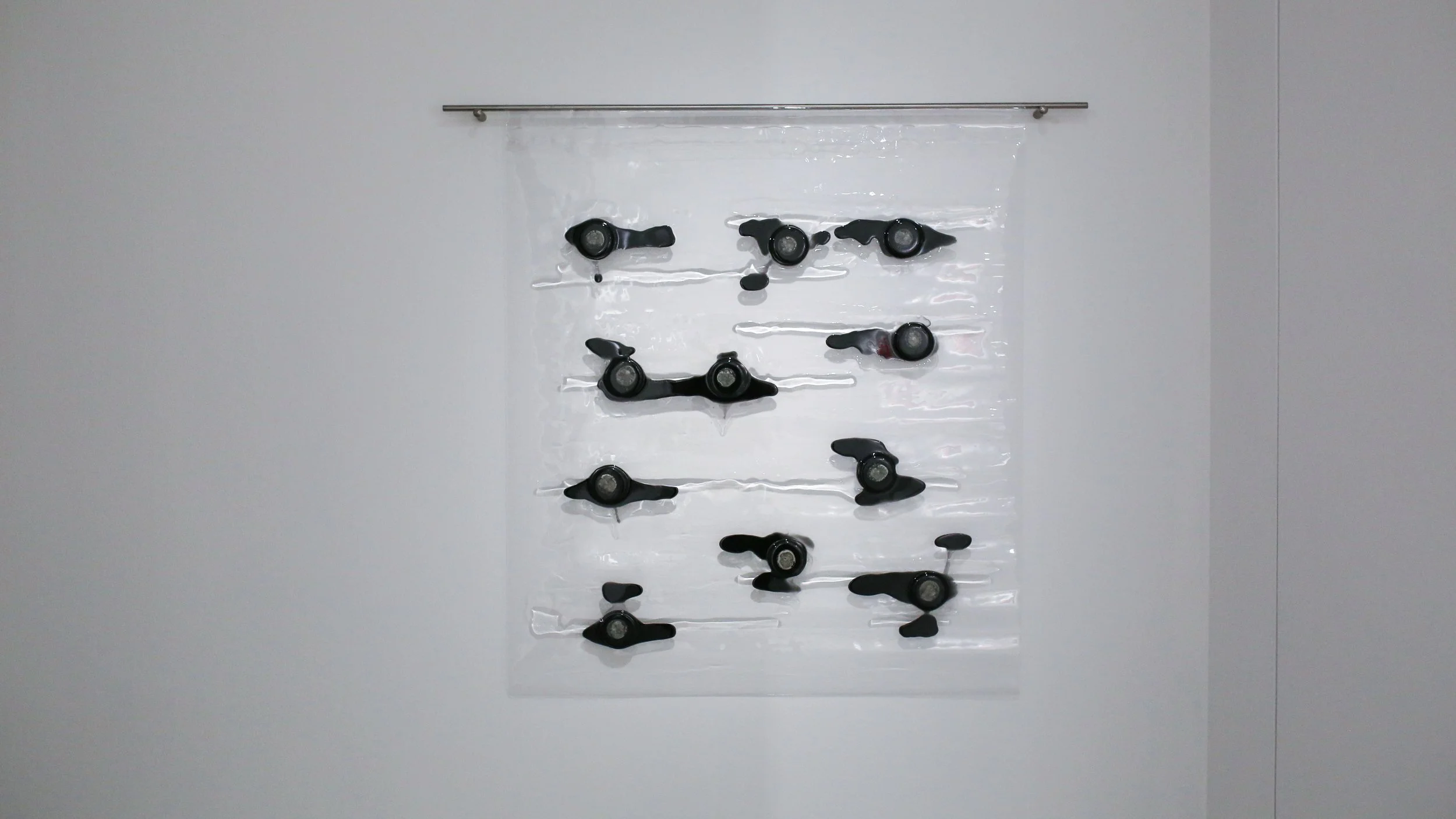
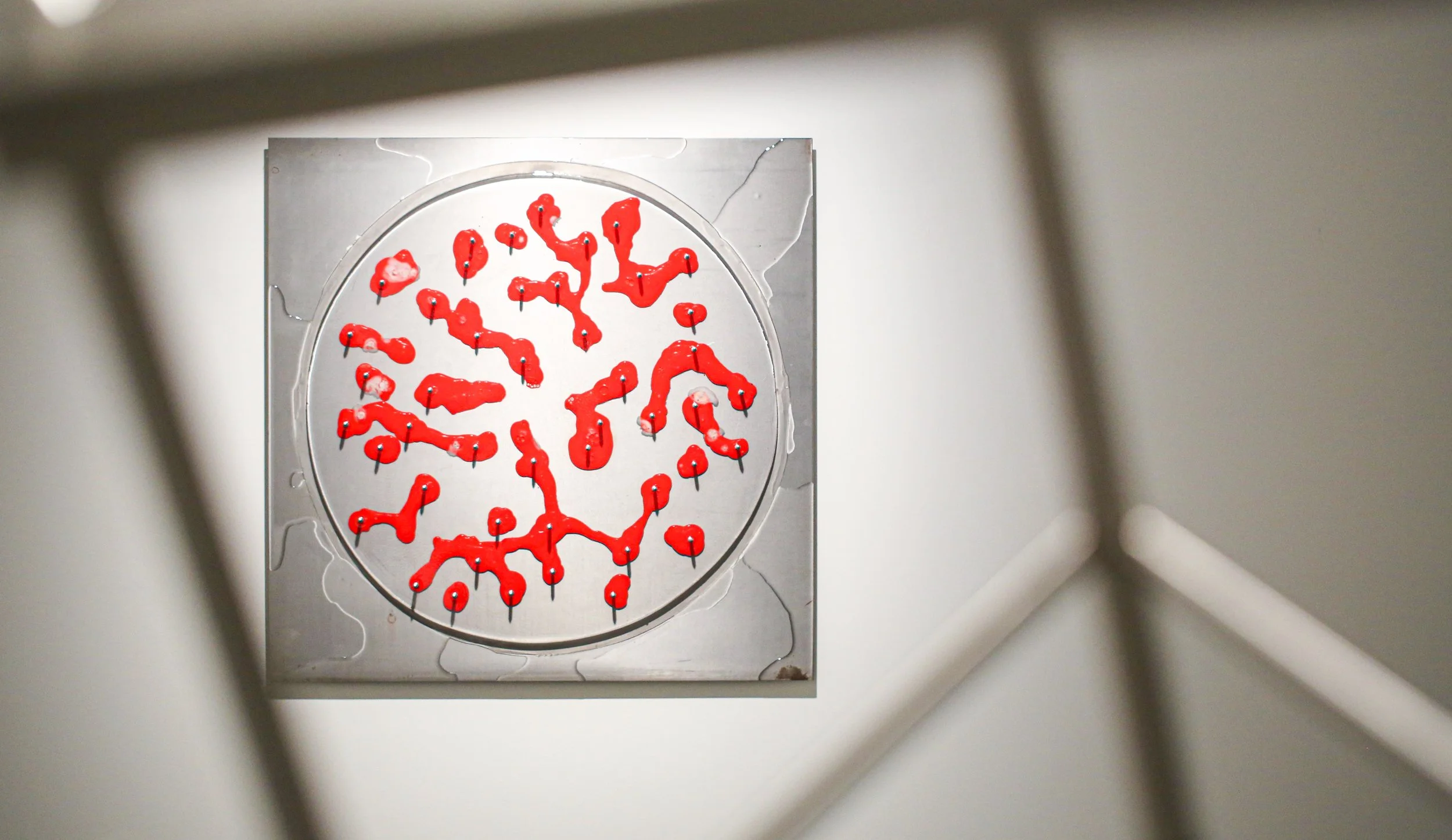
The works presented in this exhibition utilize Penicillium cultivated by the artist himself—a microorganism bearing the dual nature of life and decay, benefit and harm. Its Latin name, meaning “little brush,” becomes a fitting metaphor: within his practice, mold functions as a delicate instrument that inscribes life and time. Encased in transparent resin inspired by natural amber, these organisms are not merely preserved but “sealed” in a state of suspended imagination—echoing traces of ancient life fossilized over millennia, awaiting a potential reawakening through time. Zhou believes these life forms remain dormant, capable of renewed growth once exposed again to air and moisture.
Once convinced that rationality could explain the world, Zhou’s prolonged medical experience—marked by encounters with death—has revealed moments beyond the grasp of reason. What sustains him may be precisely this capacity for imagination. For him, “sealing” is not only a method of preservation but also a mode of thinking about life, death, existence, and time, while holding open a speculative future. His experiences on the frontlines during the SARS outbreak in 2003 and the COVID-19 pandemic further imbue this act of sealing with paradoxical meaning: in medical contexts, it signifies both protection through isolation and the suppression of life’s activity.
His practice moves beyond material experimentation to confront a fundamental question: how might art respond to the primal inquiry of time and life? The exhibition title pH Value emerges within this context. Originally a chemical measure of acidity and alkalinity, it becomes, in Zhou’s work, a poetic language for sensing subtle shifts in life and the passage of time. Through specially devised culture media and pH testing solutions, traces of biological activity are translated into visible chromatic spectra. From the minute life of mold, he reveals a temporal flow imbued with dynamism.
The “sealed” world he constructs appears still, yet conceals a latent rhythm of time and life. Existence is no longer reducible to an essential state, but unfolds as an ongoing process of becoming, relation, and transformation. These works are not endpoints; they carry potential that exceeds time itself. In this sense, Zhou’s temporal sensibility resonates with Gilles Deleuze’s philosophy of becoming: life is not a fixed form, but a continual process of change and creation.
This seemingly motionless yet pulsating, completed yet open “sealed” world embodies the flow of time, life, and existence condensed within the exhibition.
And the exhibition poses a question to the present:
Is the “life” to which we cling truly confined to the here and now?
by Cho Hyejung