Chen Huanping:The Voice Amidst Silence
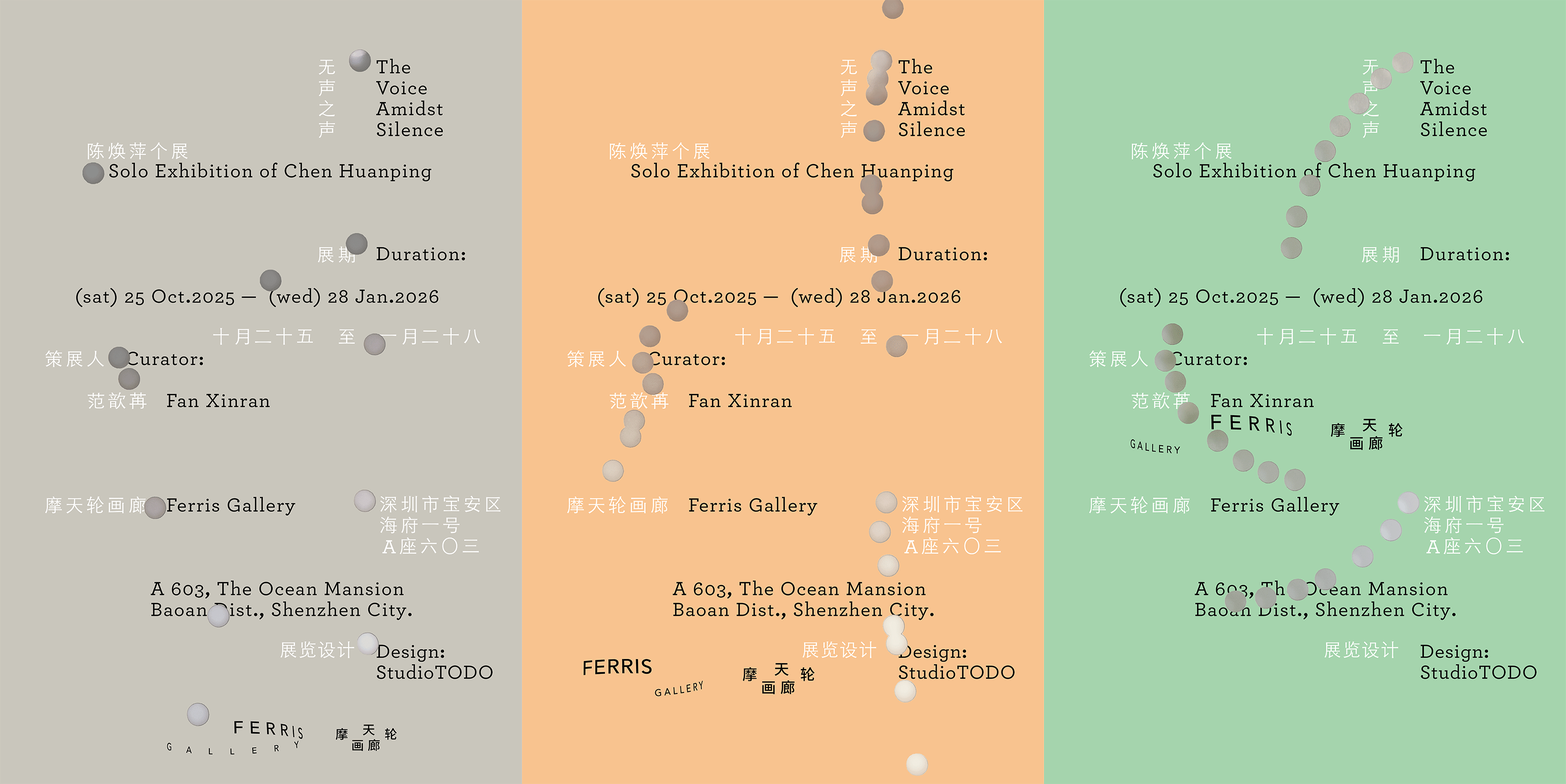
The Voice Amidst Silence
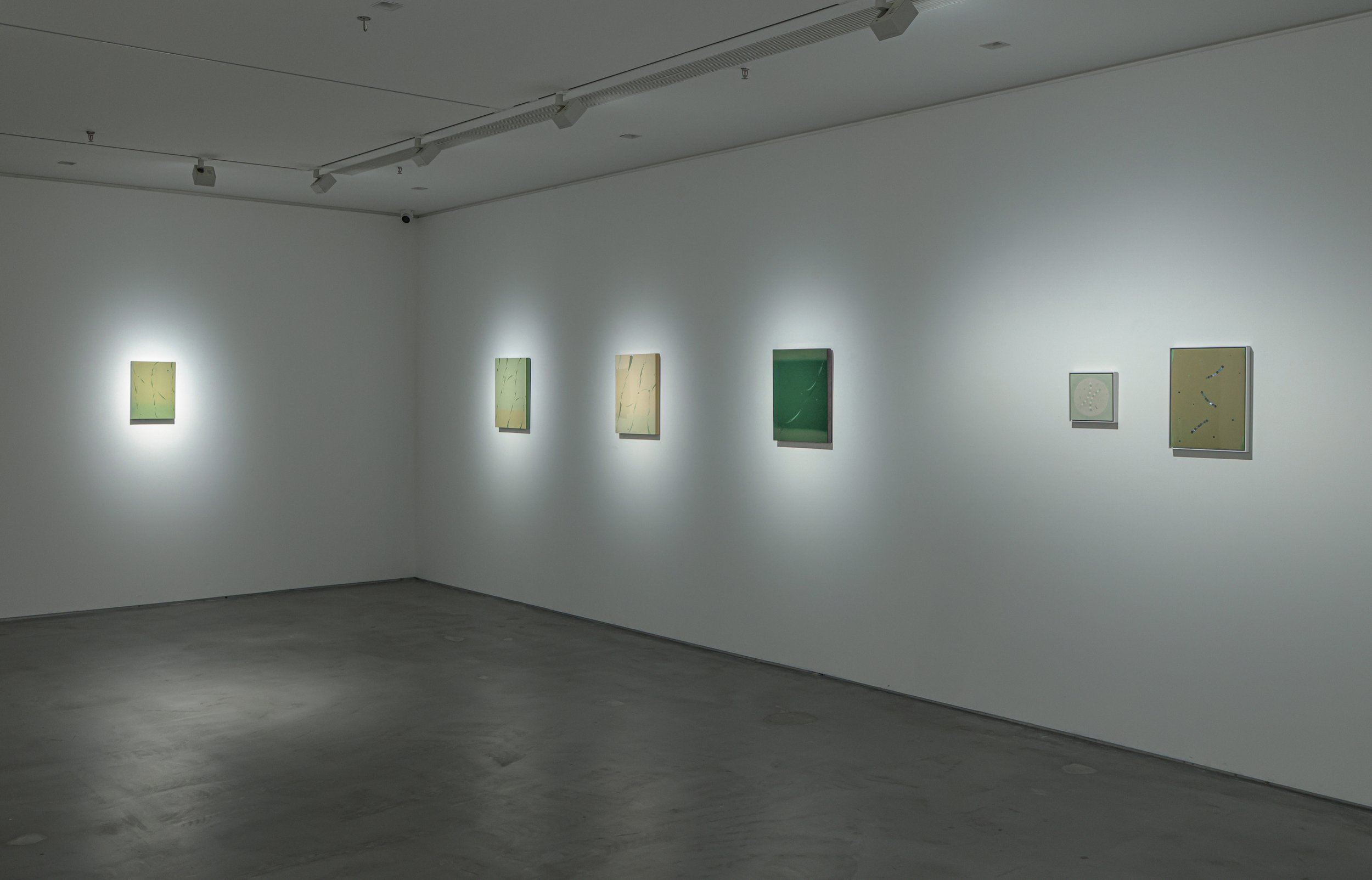
Lacquer and acrylics are the primary mediums Huanping Chen employs in her paintings, yet they can never dominantly define Chen’s artistic practice. Instead, they act as participants, companions, and guardians in her creation, but not dominators. In other words, when standing in front of her paintings, viewers need not analyze the techniques or mediums applied through decoding-based examination and interpretation; rather, they should simply listen quietly to the voice of these paintings.
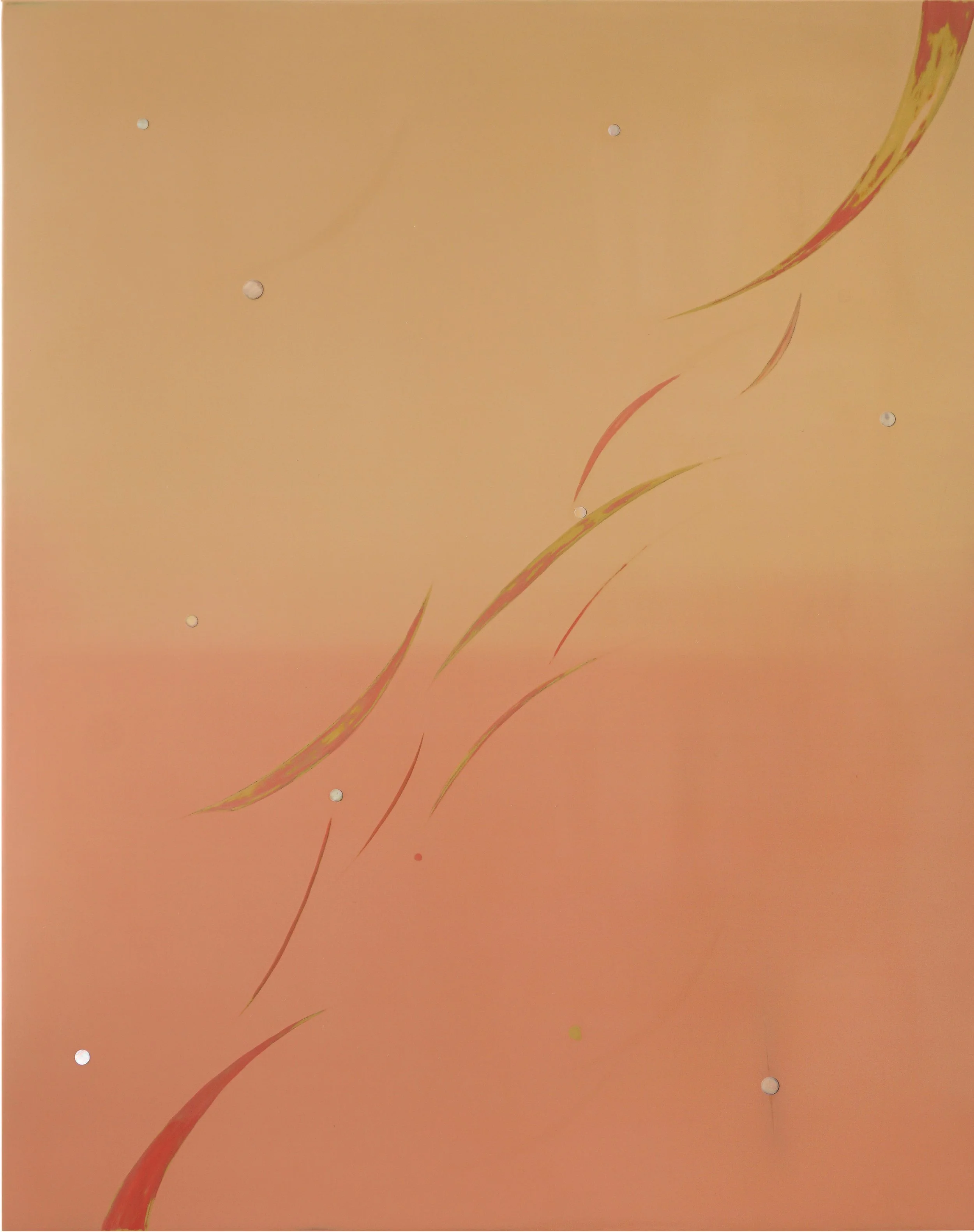
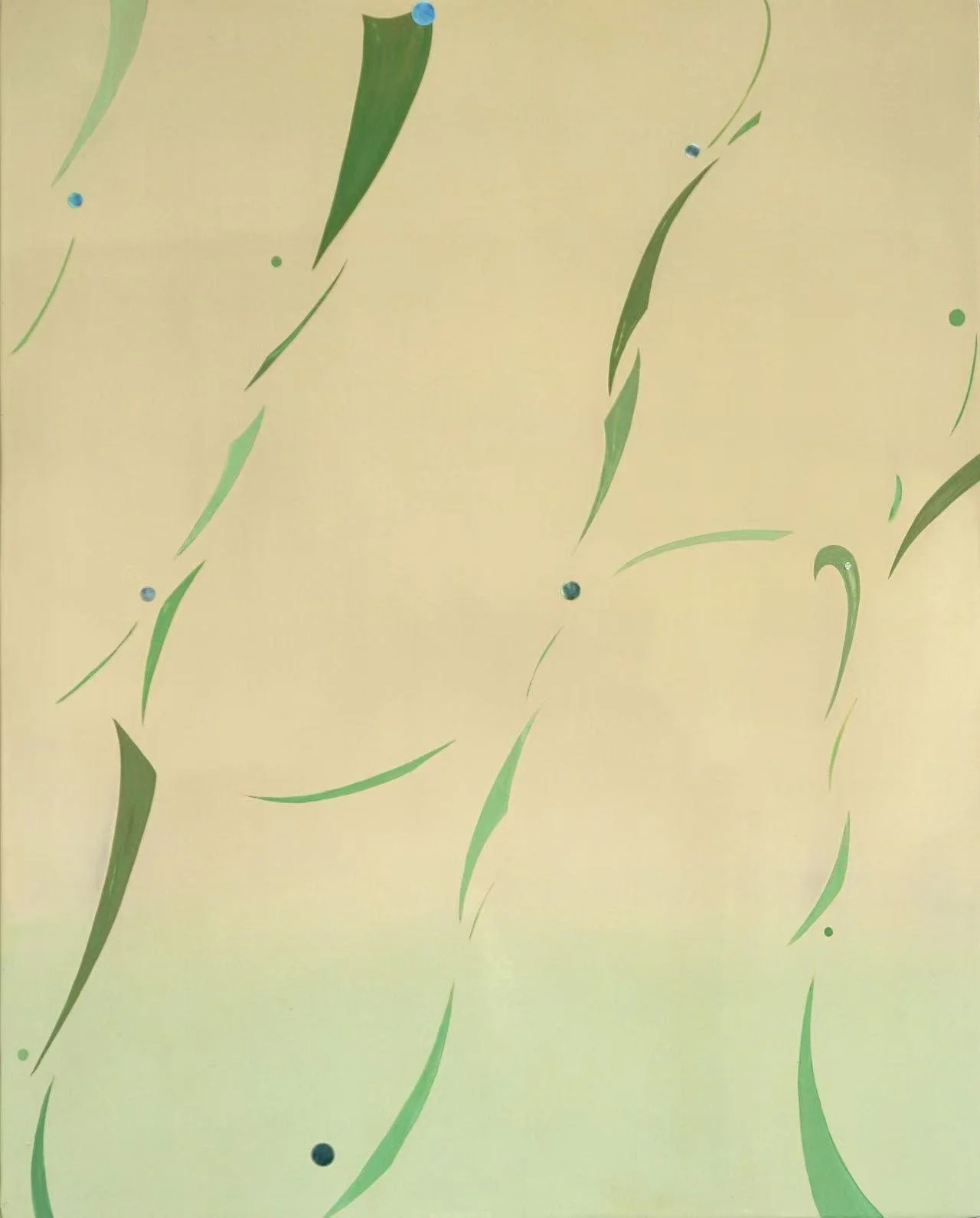
The Voice Amidst Silence stands out among numerous potential themes because it most directly, precisely, and acutely captures the core essence of Chen’s works. The “voice” here refers to an active, expressive voice, not arbitrary sound. Silence may imply the absence of sound, but it is not the same as the absence of voice. Everyday objects, classical poetry, cosmic reveries, and self-reflection all serve as Chen’s sources of inspiration. These inspirations are neither aggressive nor noisy, but instead forming a magnetic field that invites contemplation and encourages viewers to linger over the nuanced sensations. Within this “soundless” magnetic field, when viewers’ eyes meet the paintings in silence, they may occasionally hear the paintings play the melody inscribed upon them. From the perspective of perceiving the paintings, the artist’s self-interpretation, and the relationship between creative mediums and life, there are roughly three paths to “approach” Chen’s paintings: Painting as Musical Score, Painting as Poetry, and Painting as Imprint of Everyday Practice.
Painting: Musical Score
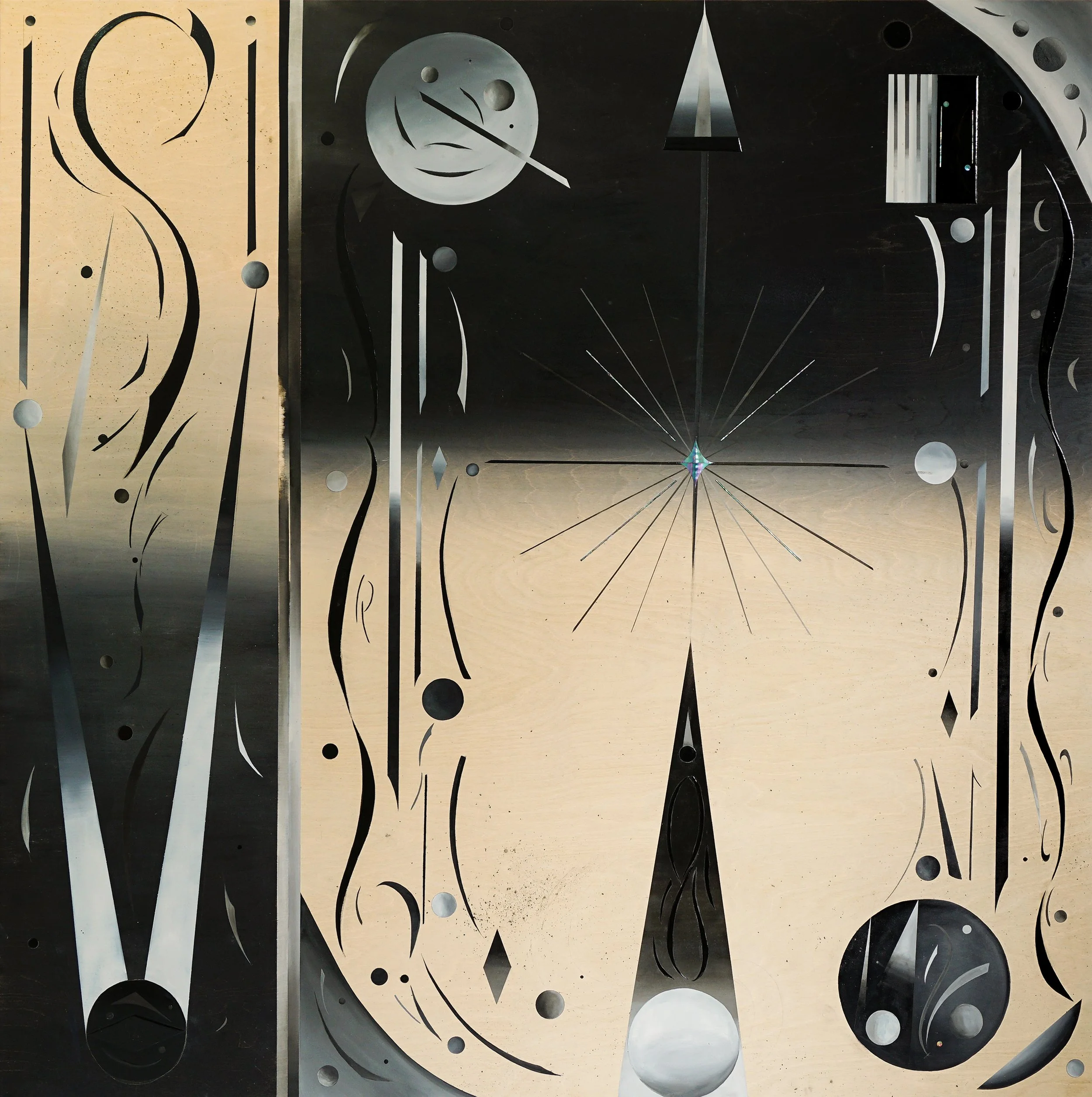
Chen’s paintings do not commit to image-making, but rather to serve as a process of extracting, filtering, distilling, and refining sensations. These sensations are not directly transferred onto the canvas. Instead, the artist takes “subtle stimuli” as the smallest perceptual units, transforms them into elements of various patterns. Through her “reconfiguration of imagery and objects”, these units altogether transformed into the perception of the depicted objects. The sensations expressed in her paintings are often a priori and highly refined, while the symbolic signs and indexical signs in the works act as ways to record and preserve these sensations. This approach seems familiar, much like how musical works are recorded and preserved on staff notation using various elements, awaiting re-realization through performance. The synaesthesia between music and visual art leads artists who reject the end of image-making in art creation to often visualize music to reveal purity and a priori nature. The traces of music in Chen’s paintings are both a coincidence and an inevitability—for sensations themselves possess rhythm and melody.
Chen’s works embody a tranquil, ethereal musicality: sensations are rationally organized and structured, free from naivety and superfluous profundity, as though they are in the very moment with their life softly blossoming. In her paintings, we can identify elements such as pearls, lunar phases, willow leaf blades, prisms, cones, and crystals. Do these recognizable elements which can relate to our everyday experiences undermine the purity and a priori nature shared by art and music? Yet this is not the case, these elements are as essential as the fundamental components of a musical score. Her paintings resemble musical scores waiting to be performed: the deconstructed elements of “subtle stimuli” are musical notes, rests, they are the pictorial translations of piano keys, strings, and drumbeats. Only when viewers attempt to encounter with the “sounds” these elements spark in their hearts does the melody come to life and play in their minds. It is precisely this soundless musicality that positions Chen’s paintings between images generated from the external world and spiritual images arising from her inner world.
Painting: Poetry
Poetry often takes shape from subtle moments of daily life or sudden emotional turmoil—starting from fleeting points, stretching into lines, and finally merging into a cohesive whole. Compared to the more straightforward and explicit expressions in Western cultures, Chen leans toward the implicit and reserved expressions rooted in Eastern aesthetics. She believes that the “emotions, narratives, and truths” in poetry lie hidden within its imagery and artistic conception, and the charm inherent in this inexpressibility (for restless emotions often elude words) resonates deeply with the language of painting.
While imagery can by easily produced, sensuous atmosphere demands creation and exploration, and only through the latter can we catch a glimpse of the truths of the world. Poetry strikes a broader resonance by incorporating personal emotions and expressions, and Chen applies this same philosophy to her paintings: she quietly seals diary-like whispers into her works. The artistic conception crafted in her Mooring at Night (Xing Chui Ping Ye) series likely emerged from the convergence of two forces: the imagery described in Du Fu’s poem On a Night Voyage, and her own occasional moments of gazing up at the cosmos. It is through the reconfiguration of imagery and objects in such moments that the artist seeks to forge the sensuous atmosphere in paintings, gently implying the grandeur of the universe and the humility of human existence.
Painting: Imprints of Everyday Practice
Mediums act as participants, companions, and guardians in Chen’s practice, and their roles cannot be overlooked. As two distinct mediums lacquer and acrylic paint offer the artist sharply different experiences, shaping not only her paintings’ formal language but her everyday routine and living rhythm. As a “living material”, lacquer requires a long life cycle for extraction and refinement. Lacquer paintings, in turn, mirror the material’s nature, also demanding a long creation period. When the final coat of clear lacquer covers the entire surface, the subjects and implication seem to be sealed as well. Notably, due to the requirement that each coat of lacquer must dry in the shade for a minimum of one to two days, Chen cannot engage in continuous work on lacquer pieces. During these intervals, she gradually expanded her practice to incorporate acrylic paint as an alternative medium. Unlike lacquer, acrylics are unshackled from the constraints of traditional craftsmanship. Thus, in series such as Listening Quietly to Soughing Pines, her works bear the alternating creative imprints of these two mediums. This cyclical alternation between mediums has gently shaped Chen’s everyday rhythm. In this way, her paintings can be regarded as the materialized imprints of her everyday practice.
All three paths offer equal access to the essence of Chen’s paintings, allowing viewers to retrieve the delicate memories and sensations sealed within. Viewers are free to choose their own way of engagement, even forging a new path is a welcome addition. However, if we further dissect the works with excessive words, the elements in the paintings will lose their potential to be performed independently in viewer’s minds.
by Fan Xinran